Last Updated Apr 16, 2025
Mastering Blog Architecture for Google and AI Search Visibility
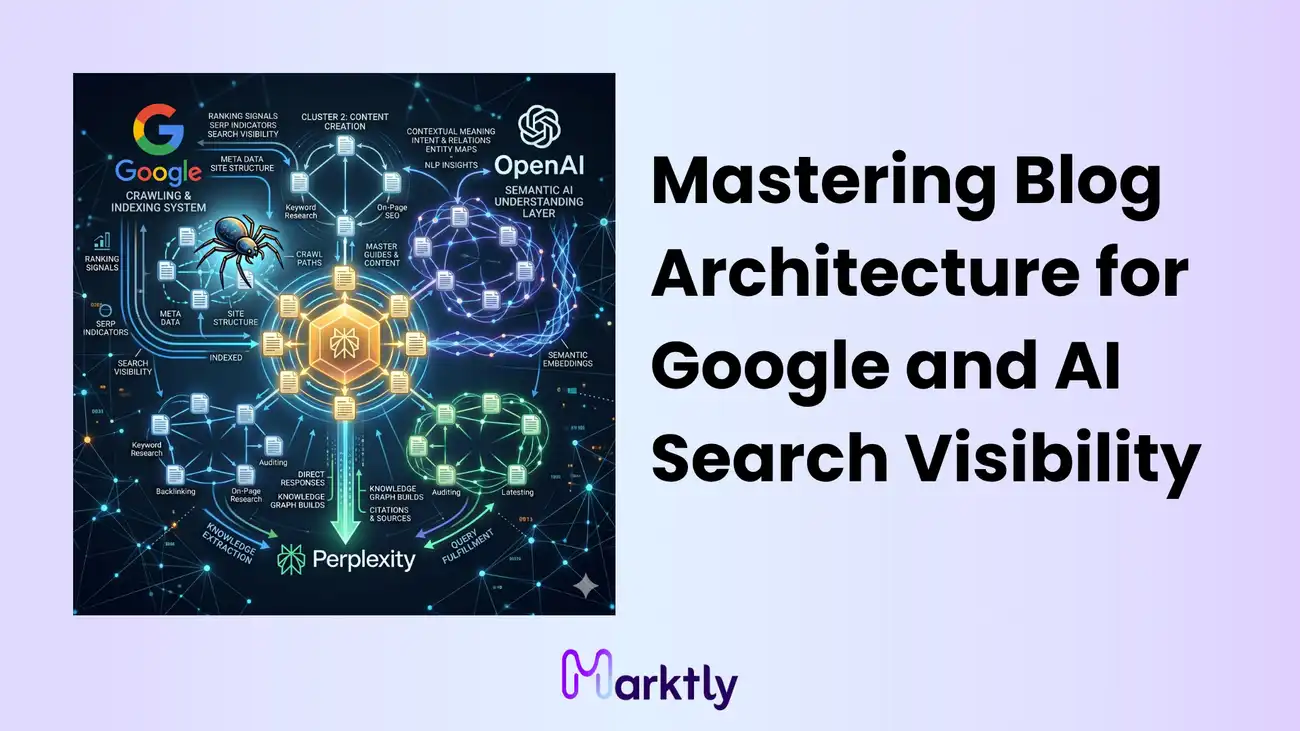
Ranking content today means being understood by multiple systems. Google relies on links, while AI engines like ChatGPT and Perplexity pull answers in real time.
This guide explains how traditional SEO and AI search work together. You’ll learn how to structure content so it ranks in Google and gets cited inside AI answers. I’ve used this approach on content that not only gets traffic but also shows up inside AI-generated responses.
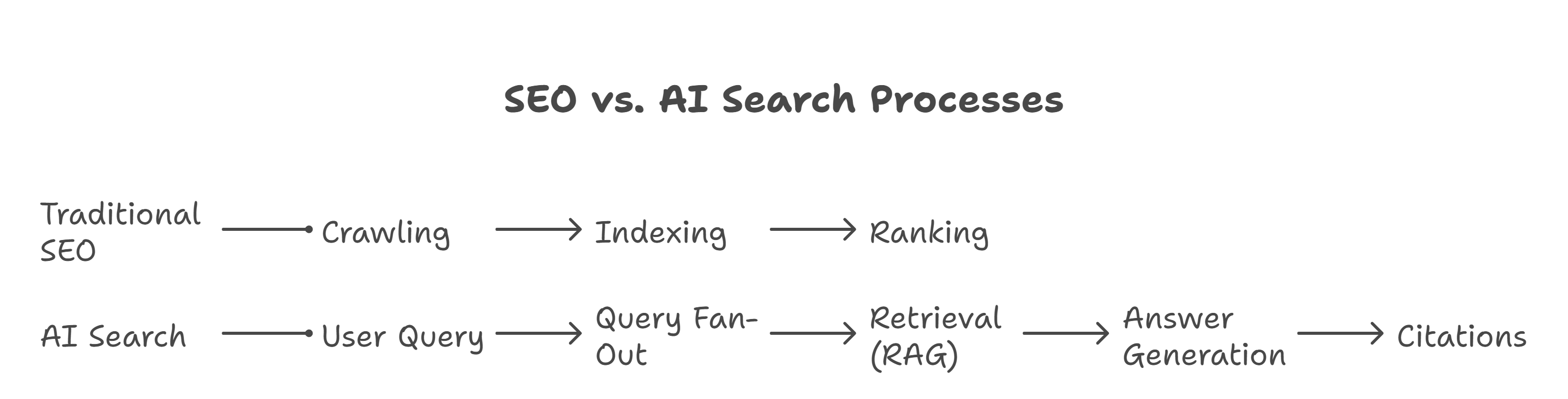
Nail Traditional SEO Foundations
Keyword research now focuses on user intent clusters. One topic can represent dozens of semantically related queries grouped by Google.
On-page elements like title tags, headings, and internal links still matter because search engines prioritize early signals, making keyword placement critical. Your primary keyword should appear naturally within the first 100 words.
Your heading hierarchy (H1–H3) acts as a content map. It helps search engines and AI systems understand structure, context, and where specific answers exist.
This part is boring, but skipping it breaks everything else. Strong AI visibility depends on solid SEO foundations.
Master the Shift to Answer Engines
AI search uses Retrieval-Augmented Generation (RAG). This means systems fetch real-time information from the web instead of relying only on training data.
Content can appear in AI results without strong backlinks when it is structured for retrieval and clarity.
Most people get this wrong because they only target the main query and ignore sub-questions.
Query fan-out breaks one query into multiple sub-questions. AI systems evaluate 5–10 related queries before generating an answer.
Example:
- What is AEO?
- How does RAG work?
- What format gets cited?
- What technical setup is required?
Articles that answer all of these get cited multiple times. Otherwise, your content loses visibility.
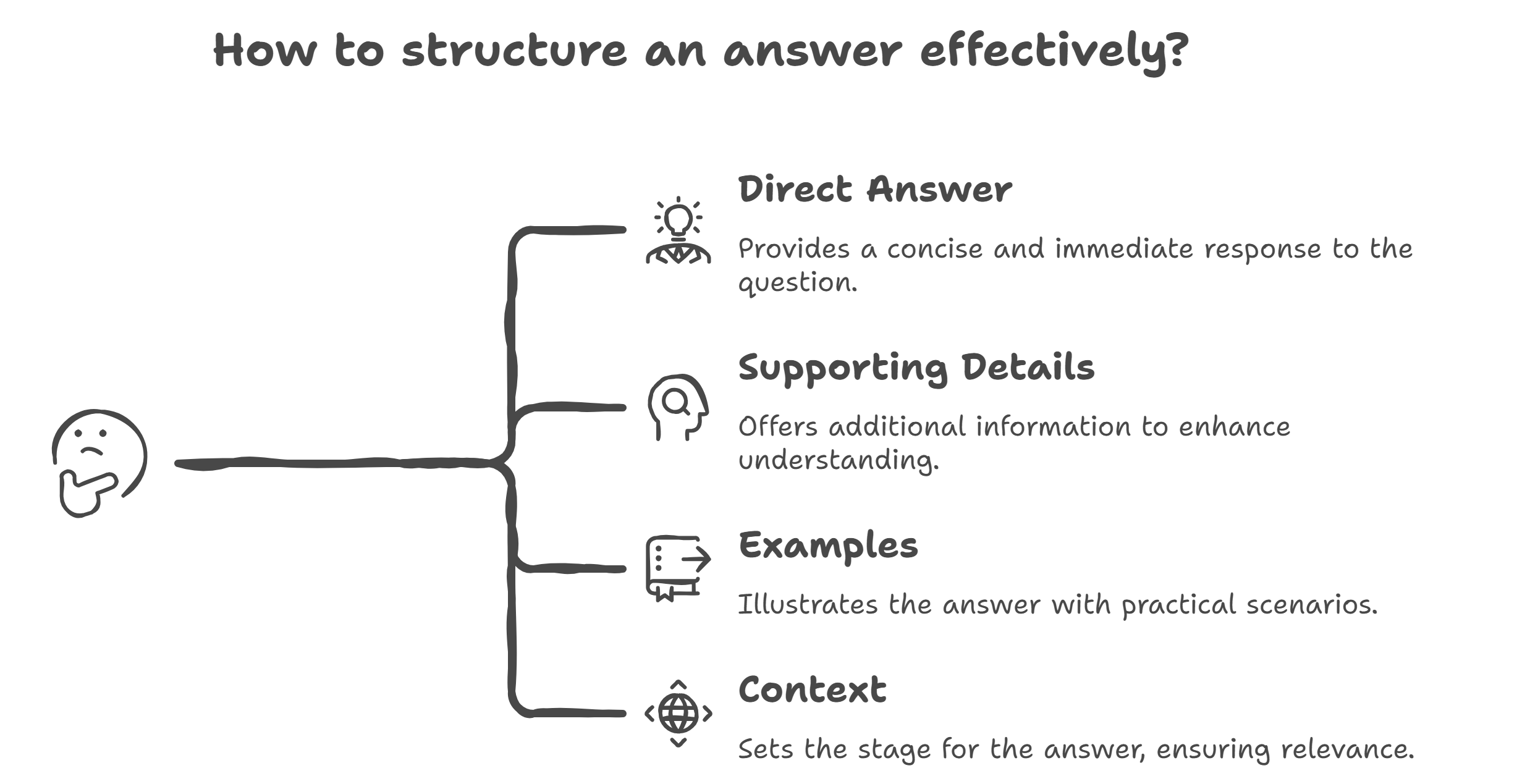
Front-loading matters more than ever. Start sections with a direct answer so AI systems can extract information quickly.
A machine scanning your page for 3 seconds should find a usable answer immediately.
Format Content for AI Extraction
Answer blocks follow a clear structure: question, direct answer, then supporting detail. This creates self-contained units that AI systems can extract without confusion.
Lists and tables improve extraction because structured formats are easier for AI systems to parse and quote.
| Format Type | Why It Works | When to Use |
|---|---|---|
| Bullet List | Easy parsing | Tips, features |
| Numbered List | Clear order | Steps, processes |
| Table | Structured comparison | Data, differences |
Schema markup using JSON-LD helps machines interpret your content correctly. It validates elements like FAQ and Article schema, improving trust and eligibility for rich results.
Google recommends structured data to improve content understanding (source: Google Search Central).
Build Authority Through Human Experience
E-E-A-T focuses on firsthand experience. Content should show real-world use, not just general advice.
AI can summarize generic content easily. It cannot replicate real experience.
Here’s a real example.
I worked on a blog that followed every SEO best practice. It had strong keywords, backlinks, and structure. It still failed to appear in AI results because it lacked original insight.
Human scars solve this problem.
Sharing failures, wrong assumptions, and lessons builds trust. It signals real expertise and helps users avoid mistakes.
Readers connect with that more.
Include original data whenever possible, such as:
- Internal performance metrics
- Screenshots of results
- Small experiments
- Surveys
Google’s quality guidelines prioritize content with firsthand experience and verifiable proof.
Ask this before publishing:
Would someone learn something here that AI alone cannot provide?
Rewrite the section when the answer is no.
Optimize the Technical Backbone
AI visibility depends on crawler access. Your robots.txt file should allow AI-specific user agents like OAI-SearchBot and PerplexityBot.
Example:
User-agent: OAI-SearchBot
Allow: /
User-agent: PerplexityBot
Allow: /
Blocking these bots prevents your content from being retrieved and cited.
The llm.txt file is an emerging standard. It acts as a directory that points AI systems to your most important, quotable content sections.
This file is not widely adopted yet, but early use provides a structural advantage as AI search evolves.
Page performance remains critical. Core Web Vitals, especially Largest Contentful Paint (LCP), should stay under 2.5 seconds.
Google confirms that page experience impacts rankings (source: Google Search documentation).
Final Thoughts
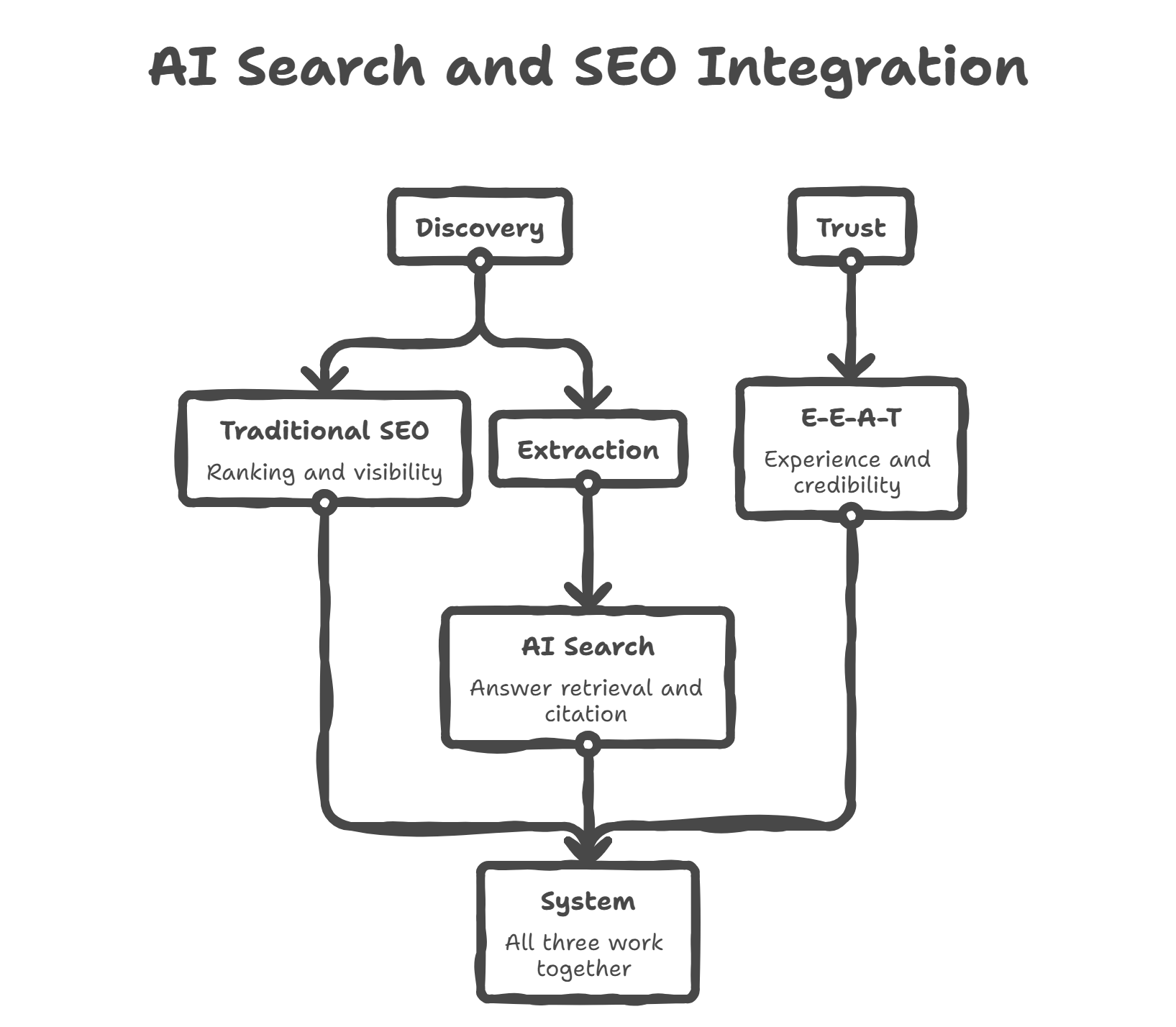
Traditional SEO drives discovery. AI optimization enables extraction. Human experience builds trust.
Missing any one of these reduces visibility because discovery, extraction, and trust depend on each other.
Start with one article:
- Add direct answer blocks
- Expand with sub-questions
- Include real experience
- Check crawler access
Keep it simple and iterate.
I can review one of your articles and show exactly where it falls short and how to fix it.
Read More Articles
Ready to create content with Marktly?
Start publishing smarter with AI-powered content workflows and seamless CMS integrations. Everything you need to go live